
Review · TOKYO
Tokyo:Luxury Sumo Show Experience & Japanese cuisine & Drink
The fun begins before the first bout. A geisha dance, a real sumo ring, and retired wrestlers turn dinner into a lively lesson on Japan’s national sport. The bilingual host keeps the rules clear, while the wrestlers supply plenty of laughs.
I especially like the close-up setting and the chance to ask questions instead of simply watching from a distance. The A5 wagyu sukiyaki, chanko hot pot, and commemorative photo give the evening real substance. The catch is that this is staged entertainment, not a serious morning practice session, and the venue has stairs.
Key points
- A geisha dance opens the evening, with time for a photo afterward.
- Two retired sumo wrestlers perform close to the audience, explaining training moves, rules, and match tactics.
- English and Japanese commentary makes the sport easy to follow.
- Dinner is built into the show, including A5 wagyu sukiyaki, chanko hot pot, and matcha dessert.
- The ring challenge is limited, and participants may be chosen by lottery.
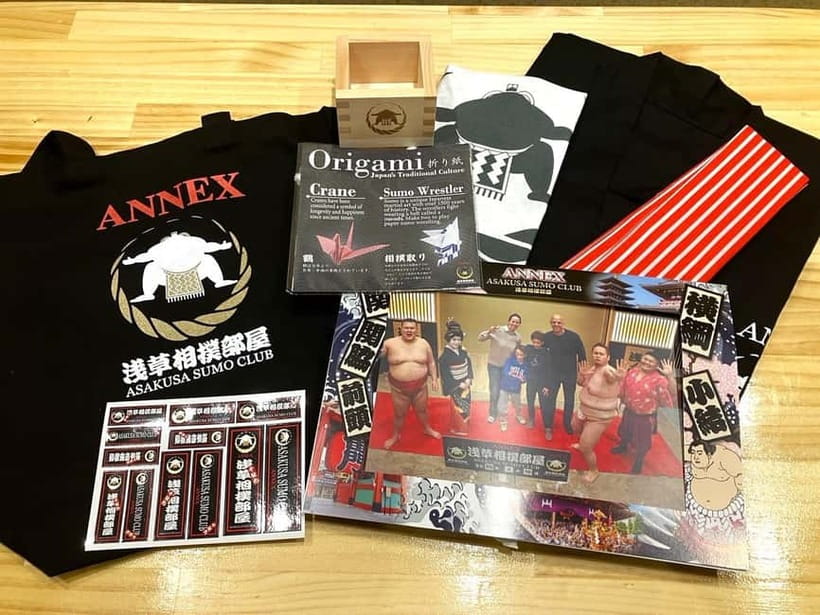
- First Class adds front-row seating, unlimited premium Yamazaki whisky, and a happi coat souvenir.
A warm introduction to sumo in Asakusa
At $103 per person, this two-hour experience is not a cheap dinner. It is a compact cultural show with a meal, drinks, photos, and audience participation included, so the value depends on how much you want from an evening out.
I would think of it as a polished introduction to sumo rather than a sports event. You will not see an active stable at work, and the wrestlers are retired. You will get something easier for a first visit: clear explanations, demonstrations, comedy, short bouts, and a chance to take part.
The Asakusa Sumo Club Annex is the smaller, more private branch of the main Asakusa Sumo Club. That matters. The ring sits in the middle of the restaurant, so you are close to the action. The room is designed to feel comfortable and refined, with table seating or sofa seating depending on the package.
You meet the venue along Asakusa Kokusai Street, next to Matsuya Restaurant. Take care at arrival, since the annex and the main venue can cause confusion. One person arrived at the wrong location and was walked to the correct one, but it is wiser to check your booking details before setting out.
More luxury tours around Tokyo:
- From Tokyo: Mt Fuji Private Day Tour In Luxury Land Cruiser
★ 4.9 · 168 reviews - Luxury van Ride to famous car meet up spot Daikoku
★ 4.5 · 148 reviews - From Tokyo/Nagano: Luxury Snow Monkey Private Full-Day Tour
★ 4.9 · 82 reviews
The opening geisha dance
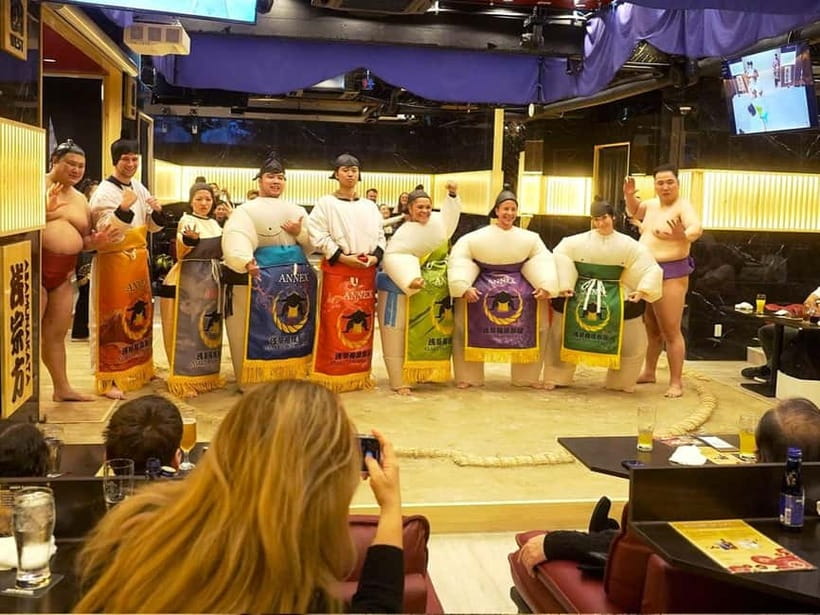
The show starts with a graceful geisha dance. It is a short performance, but it gives the evening a different mood from the noisy, comic sumo demonstrations that follow.
The dance is also a useful reminder that Japanese performance traditions are not all about speed and force. The small hand movements and careful posture make a sharp contrast with the wrestlers stomping into the ring.
Afterward, you may have a photo taken with the geisha. If you are bringing children, this can be a gentle way to settle them into the evening before the louder part begins. One family specifically appreciated the kind attention given to their daughter.
The geisha performance is not the main reason to book this activity, but it adds variety. You get a little ceremony, then a lively lesson, then audience participation. The pacing keeps the two hours from feeling like one long lecture.
Learning the rules before the bouts
Sumo can look simple until you try to follow it. Two wrestlers face each other, push, pull, and attempt to force one another out of the ring. The details matter, though: foot placement, balance, timing, ritual, and the ways a bout can end.
The live commentary in English and Japanese makes those details accessible. The master of ceremonies explains the sport while the wrestlers demonstrate techniques. Host Luke has been singled out for his clear English and easy manner, and another host named Go is also praised in the supplied feedback. The exact host may vary by performance.
This is where the experience earns its place on a Tokyo schedule. You are not expected to arrive knowing the difference between a push-out and a throw. The show gives you enough background to understand what you are seeing, without turning the evening into a formal class.
I recommend preparing a few questions. The question-and-answer time is one of the better parts of the format. You can ask about rules, training, rituals, or the wrestlers’ experience. The performers are encouraged to interact with the audience, so this is not a sit-back-and-watch presentation.
The explanations are aimed at a general audience. That makes the event a strong choice for first-time visitors and families, though experienced sumo followers may find the material familiar.
Dinner arrives while the ring stays busy
Your meal is part of the show, not an afterthought. The standard package includes a sukiyaki meal featuring Japanese A5 wagyu beef, chanko nabe hot pot, and matcha dessert, along with one complimentary drink.
Sukiyaki gives the meal a special touch. The A5 label refers to a high grade of Japanese beef, and the dish is served as a central part of the menu rather than a small tasting portion. Chanko nabe is closely associated with sumo stables, where hearty hot pot helps feed wrestlers. Here, it gives you a direct food link to sumo culture.
The portions are generous enough that some diners found the meal substantial. Food quality was usually a highlight, though one person found the meal needed to be hotter. That is a fair caution for anyone who cares more about dinner than the show. The meal is designed to be eaten during a live performance, so timing and temperature may not always match a quiet restaurant meal.
Matcha dessert closes the food portion on a lighter note. Vegetarian and vegan meals can be arranged, but you must request them at least two days before the booking date. If you wait until the day of the show, a regular meal will be prepared. Gluten-free and halal meals are not available, though you may bring your own food if needed.
Same city, a more exclusive way in:
- Tokyo Toyosu Tuna Auction + Breakfast (Sushi Dai or Bentomi)
★ 4.8 · 97 reviews - Tokyo: WARP SHINJUKU Nightclub Ticket with Drink / VIP Plan
★ 4.2 · 55 reviews - Tokyo: Private Makeover Photography Studio in Luxury Kimono
★ 5.0 · 22 reviews - Tokyo: Luxury Nikko Private 1 Day Tour Low Price Guaranteed
★ 5.0 · 13 reviews
Choosing between Standard, Business, and First Class
The seating category changes both your comfort and what comes with dinner. Standard is the sensible choice if you mainly want the show and a basic meal.
Standard table seating includes:
- Sukiyaki meal
- Chanko hot pot
- Matcha dessert
- One complimentary drink
- Clear views of the ring
Business moves you to a sofa and adds more food and drink. You receive sukiyaki, tempura, chanko hot pot, and unlimited drinks. The sofas provide a more relaxed setting, especially if you are spending the full two hours eating and watching.
First Class is for people who want the closest possible view and the most generous package. You sit on a front-row sofa, receive the same food as Business, and get unlimited drinks including premium Japanese whisky such as Yamazaki. The package also includes an exclusive souvenir set with a happi coat.
I would not automatically pay more for First Class. The Standard seat already places you in the same room with a clear view. Business makes more sense if you expect to use the unlimited drinks and value sofa seating. First Class is best for a special occasion, whisky drinkers, or anyone who wants to be right beside the ring.
The $103 price point is easiest to justify if you compare it with a dinner, an English-language cultural show, drinks, a professional photo, and souvenirs purchased separately. It is less appealing if you do not drink, have little interest in audience participation, or prefer quiet, traditional dining.
Watching real techniques up close
The wrestlers demonstrate training techniques before the bouts. You see movement, balance, and power at close range, rather than a distant stage performance.
The matches are presented for entertainment, and humor is part of the package. The wrestlers interact with the room, play to the audience, and keep the tone light. This is why the event works for children. A seven-year-old was reported to have loved the evening, and teenagers also enjoyed taking part.
Do not mistake the friendly mood for a serious competition. These are retired wrestlers performing for an audience. The show is built to explain and entertain, not to reproduce the atmosphere of an active stable or a professional tournament.
That distinction is important. If your main goal is to watch current wrestlers train in silence and follow strict stable routines, choose a different experience. If your goal is to understand the basic traditions and enjoy an evening with people who know the sport, this format is more approachable.
Taking your turn in the ring
The sumo challenge is the evening’s biggest crowd moment. You may be invited to step into the ring and test your strength against a wrestler in a friendly match.
Participation is limited for each performance. If too many people want to join, the final participants are selected by lottery. You should not book this event assuming you will wrestle. Treat it as a bonus, not a promised part of the package.
The challenge is suitable for brave adults and older children who want to try something silly and memorable. It can be especially enjoyable for families, since children may be brought into the action in a gentle, lighthearted way.
If you do take part, expect the room to watch and cheer. Staff can help with photos and video, which is useful for solo visitors. One solo diner was able to join the challenge and received help taking pictures. That is a nice detail for anyone arriving without a companion.
Photos, souvenirs, and the final moments
After the performance, you receive a commemorative photo with the wrestlers. Staff also take pictures and videos during parts of the evening, giving you more than a quick snapshot at the door.
The souvenir depends on your seating category, and seasonal changes are possible. First Class includes a special souvenir set with a happi coat. Standard and Business also receive gifts, though the exact item may vary.
The photo and souvenir matter because they give the night a clear ending. You do not simply leave after the final bout. There is time to meet the wrestlers, pose with them, and collect something physical from the experience.
The friendly staff are a major part of the evening. They help with photos, explain what is happening, answer questions, and encourage people who look uncertain about joining in. That support keeps the event from feeling awkward, especially for solo visitors.
Who will enjoy this two-hour show
I would recommend it most strongly to:
- First-time visitors who want an easy introduction to sumo
- Families with children older than one year
- Couples looking for an unusual dinner
- Solo visitors who want an activity with built-in interaction
- Anyone who enjoys food, photos, and a bit of stage comedy
- Visitors who want English explanations of Japanese customs
It is less suitable for you if you want a quiet meal, a serious sporting contest, or active stable training. The comedy and audience involvement are central to the experience.
Babies under one year are not suitable for the activity, and infants do not receive meals, seating, or souvenirs. The venue is not wheelchair accessible because of stairs. You may also be seated with other people, so private dining is not guaranteed.
Timing your visit in Asakusa
The show lasts two hours, with several start times depending on availability. A late performance can work well after visiting Sensoji and the surrounding streets, though parts of Asakusa may be quiet by the later evening.
One useful idea is to arrive early enough to enjoy the temple area before the show. The meeting point is near Asakusa Kokusai Street and Matsuya Restaurant, so allow time to confirm that you are heading to the Annex rather than the main club.
The activity does not include transport. You make your own way to the meeting point, and the location is in Asakusa, a practical area for combining food, temples, shopping, and an evening performance.
Cancellation is flexible up to 24 hours before the start time for a full refund, and you can reserve now and pay later. Still, make meal requests early, especially for vegetarian or vegan food.
Should you book the Asakusa Sumo Club Annex?
Book it if you want a friendly, easy-to-follow cultural night rather than a formal sports event. The bilingual commentary, geisha dance, hearty meal, close seating, and ring challenge create a full evening with plenty to do.
I would choose Standard for value, Business for comfort and drinks, and First Class only when front-row seating and premium whisky are important to you. The show has earned a 4.7 rating from 577 ratings, and the strongest pattern is clear: people appreciate the warm staff, funny wrestlers, simple explanations, interactive format, and generous food.
Skip it if you need wheelchair access, strict dietary preparation without advance notice, or an authentic active-stable training session. For most first-time visitors to Tokyo who want to learn a little, laugh a lot, and leave with photos, this is a strong pick.
FAQ
How long does the Asakusa Sumo Club Annex experience last?
The experience lasts two hours.
What food is included?
The meal includes a Japanese A5 wagyu beef sukiyaki bento, chanko nabe hot pot, and matcha dessert. Tempura is included with Business and First Class seating.
Are drinks included?
Standard includes one complimentary drink, with additional drinks available for purchase. Business and First Class include unlimited drinks. First Class also includes premium Japanese whisky such as Yamazaki.
Can I participate in the sumo challenge?
You may be able to enter the ring for a friendly challenge. The number of participants is limited, and a lottery is used if many people want to take part.
Is the show suitable for children?
Yes. The show is designed for adults and children, though babies under one year are not suitable for the activity.
Are vegetarian or vegan meals available?
Yes, but you must request a vegetarian or vegan meal at least two days before the reservation date. A regular meal will be prepared if no advance request is made.
Is the venue wheelchair accessible?
No. The venue is not wheelchair accessible because it has stairs.
Is this an active sumo stable training session?
No. The show is performed by retired sumo wrestlers for entertainment. It is different from a serious early-morning training visit at an active stable.
New VIP and luxury tours around Tokyo
- Tokyo Private Tour English Pro Guide By Luxury Vehicle★ 4.7 · 6 reviews
- Tokyo:Luxury Private Tour with English-Speaking driver★ 5.0 · 7 reviews
- Tokyo: Private Nikko Sightseeing Tour In Luxury Land Cruiser★ 4.1 · 8 reviews
- Tokyo: Private Makeover Photography Studio in Luxury Kimono★ 5.0 · 22 reviews
- Tokyo: WARP SHINJUKU Nightclub Ticket with Drink / VIP Plan★ 4.2 · 55 reviews
- Tokyo: Luxury Nikko Private 1 Day Tour Low Price Guaranteed★ 5.0 · 13 reviews
- Nikko in Style: Luxury private Day Tour with English guide★ 5.0 · 9 reviews
- Mt Fuji : Private 10-Hour Luxury Tour by Exclusive Car★ 3.8 · 13 reviews
More of the best Tokyo Luxury Tours
From Tokyo: Mt Fuji Private Day Tour In Luxury Land Cruiser
Read our review →
Luxury van Ride to famous car meet up spot Daikoku
Read our review →
Tokyo Toyosu Tuna Auction + Breakfast (Sushi Dai or Bentomi)
Read our review →
From Tokyo/Nagano: Luxury Snow Monkey Private Full-Day Tour
Read our review →
Tokyo: WARP SHINJUKU Nightclub Ticket with Drink / VIP Plan
Read our review →
Tokyo: Private Makeover Photography Studio in Luxury Kimono
Read our review →
Tokyo: Luxury Nikko Private 1 Day Tour Low Price Guaranteed
Read our review →Lists this tour is ranked in