
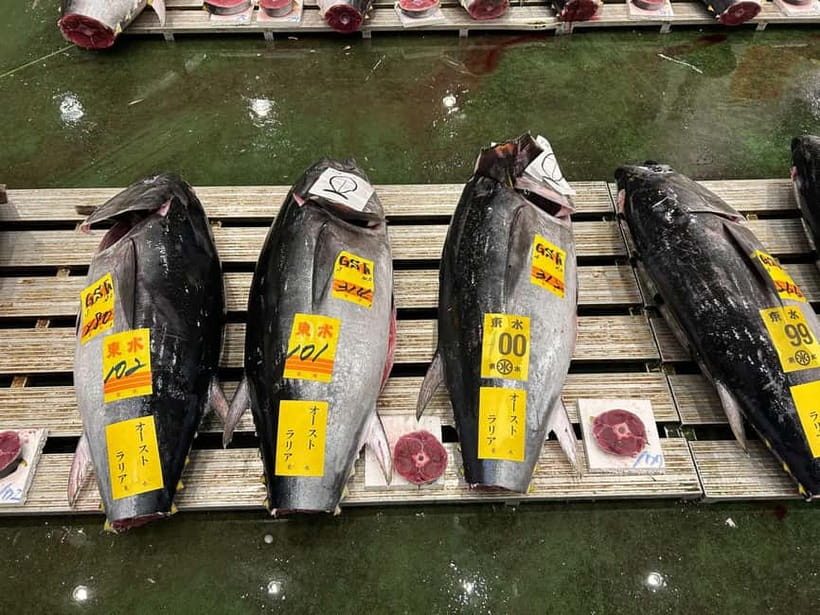
Review · TOKYO
Tokyo Toyosu Tuna Auction + Breakfast (Sushi Dai or Bentomi)
Toyosu’s tuna auction is Tokyo at its most focused: buyers study huge bluefin tuna, auctioneers call out prices, and hand signals move serious money in seconds. This 5:25 AM start gets you into the market before the city is fully awake, with a guide explaining what you are seeing rather than leaving you to guess from a distant gallery.
I especially like the chance to compare ordinary bonito flakes with rare maguro-bushi, and I like that guides such as Rabia and Ami have working connections inside the market. A reserved seat at Sushi Dai or Bentomi is another strong point, since securing breakfast is often harder than eating it. The catch is important: the $141 price does not include breakfast, and the closest auction access may require advance planning and a very early taxi ride.
Key points to know before booking
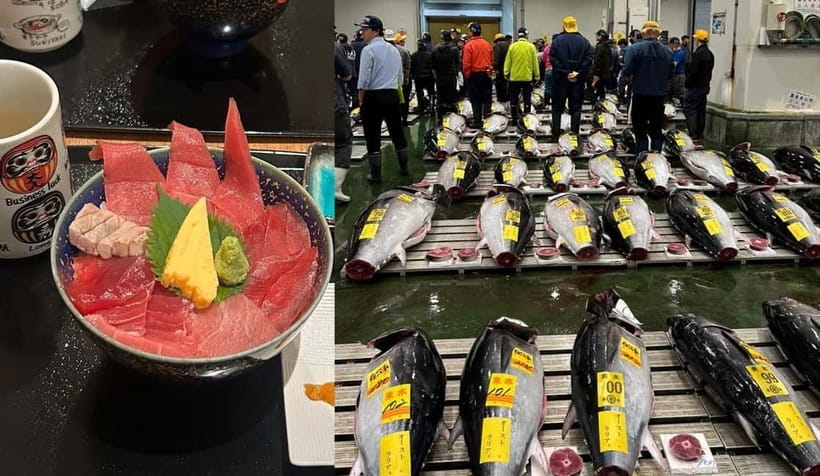
- The auction begins before sunrise: Meet at about 5:25 AM and arrive early, especially if you are using public transportation.
- You choose your viewpoint: The public 3rd-floor gallery offers a broad view, while the ground-level deck is limited to four people and requires advance contact.
- Fresh tuna is not guaranteed: You may see the coveted fresh tuna auction, but the morning’s exact activity depends on market conditions.
- The guide adds the meaning: You learn tuna grading, buyer hand signals, and market routines instead of simply watching a distant room.
- Breakfast is reserved, not included: Your booking is arranged at Sushi Dai or Bentomi, but you pay the restaurant directly.
- The bonito lesson is unusually hands-on: You shave katsuobushi, taste it, and compare it with maguro-bushi.
Why the Toyosu auction is worth waking up for
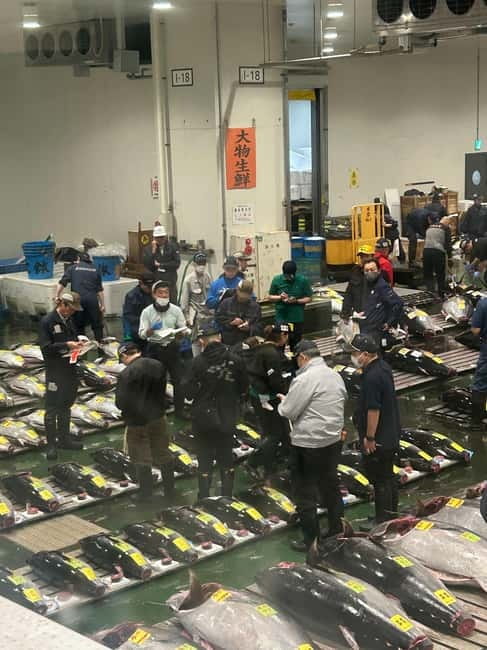
Toyosu Market is not a staged show. It is a working wholesale market where tuna is inspected, graded, and sold to professional buyers who supply Tokyo’s sushi trade. That distinction matters. You are watching a commercial ritual tied directly to the food on Japanese menus.
The auction itself moves quickly. Buyers inspect the tuna, auctioneers call out information, and bidders use hand signals known as te-jirushi. Without guidance, the gestures and fast pace can blur together. A good explanation turns the room into a lesson in price, quality, timing, and professional judgment.
The auction is also a visual experience. Hundreds of fresh and frozen tuna may be present, and the scale helps explain why Toyosu is so important to Tokyo’s seafood industry. The most prized fresh tuna might appear, but you should not book this expecting a guaranteed headline fish every morning. The market decides what you see.
The tour lasts 150 minutes, so it is compact enough to fit into a busy Tokyo itinerary. I like the timing for another reason: once the breakfast portion ends, you still have most of the day ahead of you. The tradeoff is obvious. You need to be alert at an hour when most visitors are still asleep.
More ways to do Tokyo in style:
- Tokyo:Luxury Sumo Show Experience & Japanese cuisine & Drink
★ 4.7 · 577 reviews - From Tokyo: Mt Fuji Private Day Tour In Luxury Land Cruiser
★ 4.9 · 168 reviews - Luxury van Ride to famous car meet up spot Daikoku
★ 4.5 · 148 reviews
Choosing between the 3rd-floor gallery and the ground-level deck
The standard option uses Toyosu’s 3rd-floor observation gallery. From there, you get a wide view of the auction hall and can follow the action from above. This is the more comfortable choice for most people, especially first-time visitors who want to understand the full room rather than focus on one tuna or one buyer.
Your guide can point out the auctioneers’ calls, the hand signals, and the way buyers assess the fish. The higher viewpoint also gives you a better sense of the market’s scale. You are not standing right beside the sale, but you can watch the overall process clearly.
The exclusive ground-level deck is a different proposition. It is limited to a maximum of four people and places you only a few meters from the bidding action. That proximity gives the auction more force. You may see the buyers and fish at close range, rather than treating the room as a distant picture.
This option needs planning. The provider recommends contacting Yummy Guide through Instagram, at @yummyguidejapan, about two months ahead. VIP participants may need to arrive before public transportation is running, so a taxi or a walk becomes part of the plan.
I would not assume that the ground-level option is automatically better for everyone. It is more personal and scarce, but the 3rd-floor gallery is easier to arrange and offers a broader view. Ask yourself what you value more: close access to the working floor or a simple, comfortable overview.
The wholesale connection adds real value
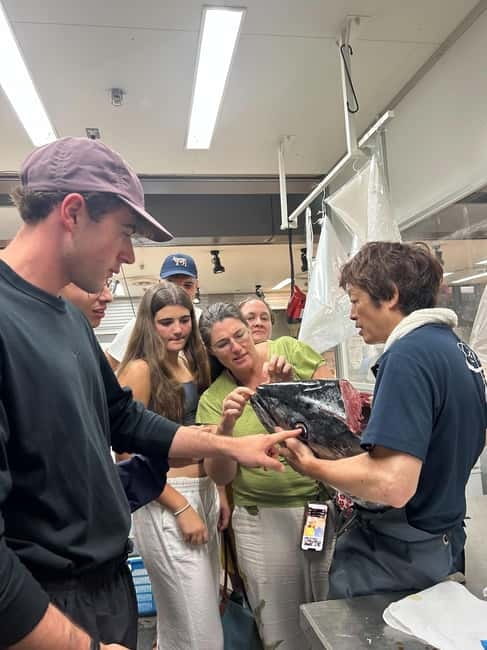
One of the best parts of this outing is the possibility of visiting the wholesale area and speaking with a tuna dealer. The guides have developed relationships with vendors, and that can give you a look at tuna preparation that a public gallery cannot provide.
You might see a wholesaler prepare the fish for sale and sample high-quality sashimi. The details make the market easier to understand. Tuna is not simply delivered to a restaurant as one finished product. Buyers and wholesalers handle, assess, cut, and distribute it before it reaches the sushi counter.
This stop also makes the industry feel human. You can ask about tuna fishing, quality, and the path from market to restaurant. Rabia is repeatedly praised for her friendly manner, market connections, and ability to answer questions. Ami is also associated with clear explanations during the auction.
The experience is not identical every morning, so I would treat the wholesaler visit as a valuable possibility rather than a guarantee of a particular demonstration. Still, it is one reason this tour offers more than the standard public observation visit.
Shaving katsuobushi is the surprise lesson
After the auction, you get a hands-on introduction to katsuobushi, the dried bonito used in many Japanese dishes. You try shaving the block yourself, then taste the flakes.
This small activity explains something that a bowl of miso soup usually hides. Japanese cooking often builds flavor from carefully prepared ingredients that are easy to overlook once they are served. Freshly shaved bonito has a different character from packaged flakes, and the comparison gives you a practical way to notice that difference.
The tour also includes a taste of rare maguro-bushi, made from tuna rather than bonito. That comparison is unusual and gives the morning a clear theme: you are not only watching tuna being sold, you are considering how Japanese seafood becomes part of everyday cooking.
A special miso soup cup is included as a souvenir. It is a modest item, but it ties neatly to the tasting and gives you something useful to take home.
Same city, a more exclusive way in:
- From Tokyo/Nagano: Luxury Snow Monkey Private Full-Day Tour
★ 4.9 · 82 reviews - Tokyo: WARP SHINJUKU Nightclub Ticket with Drink / VIP Plan
★ 4.2 · 55 reviews - Tokyo: Private Makeover Photography Studio in Luxury Kimono
★ 5.0 · 22 reviews - Tokyo: Luxury Nikko Private 1 Day Tour Low Price Guaranteed
★ 5.0 · 13 reviews
Breakfast at Bentomi or Sushi Dai
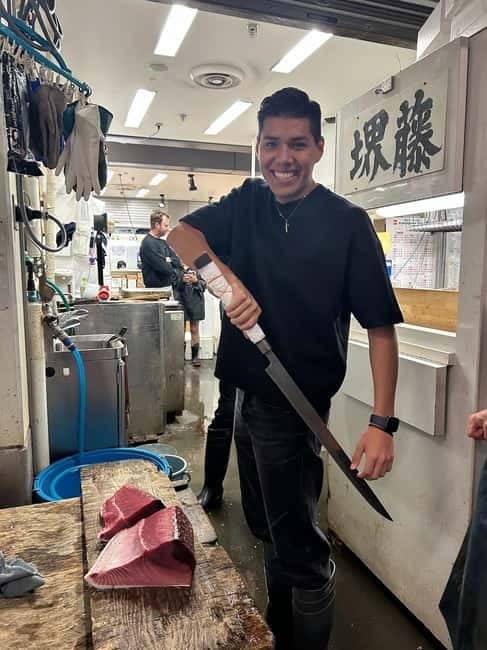
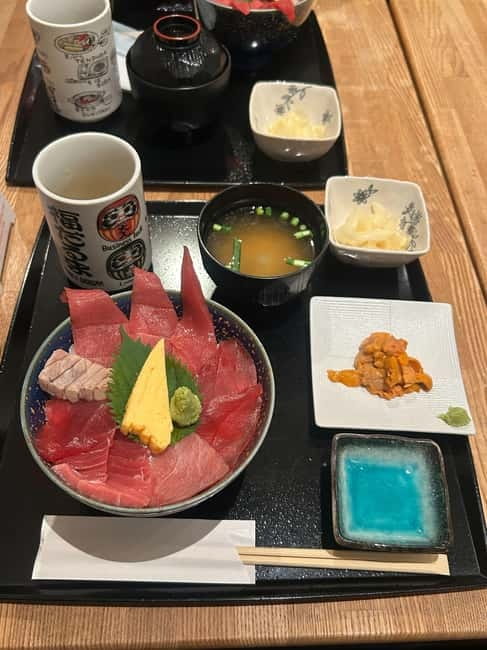
The final food stop is where the price question needs careful attention. The tour includes a reservation at either Bentomi or Sushi Dai, but the meal fee is separate. The $141 covers the guided experience and reservation service, not the sushi or seafood breakfast itself.
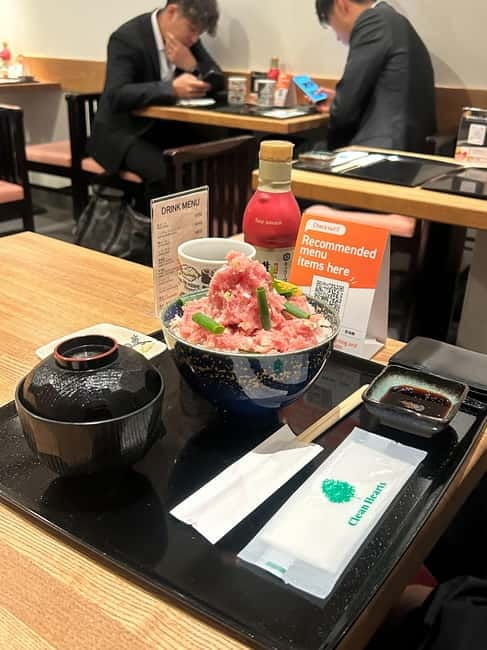
Bentomi is described as a long-time favorite among seafood professionals. You can expect tuna bowls, known as kaisendon, and other dishes built around ingredients arriving from the market that morning. This is a good choice if you want a generous seafood meal and a direct connection to the market’s produce.
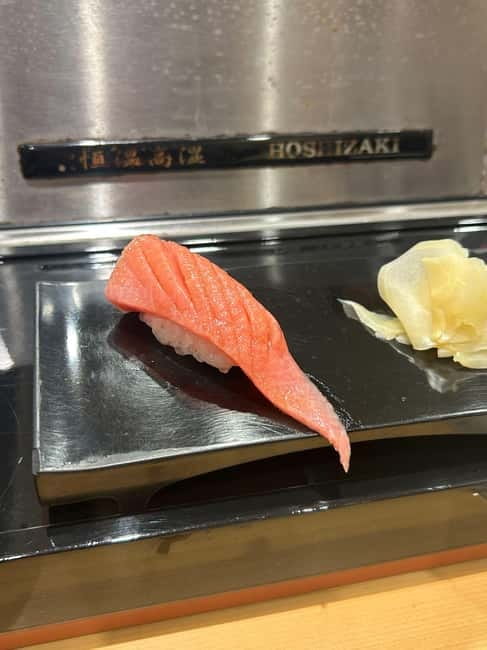
Sushi Dai is the more refined option. It is a celebrated sushi counter featured in the Michelin Guide, with an omakase breakfast based on seasonal fish. Seating is extremely limited and available only with select tour plans.
The reservation service is a major practical benefit. Sushi Dai can involve a very long wait, and the tour team may handle the reservation process so you do not spend the early morning standing in line. That does not make the meal free, and it does not remove the need to check which breakfast option your booking includes.
I would choose based on your eating style. Pick Bentomi if you want a market-style seafood bowl and a more casual meal. Choose Sushi Dai if the counter setting and chef-selected sushi are central to your Tokyo plans. Either way, check the exact plan before paying, since the breakfast venue and access level can vary.
What the $141 price really buys you
At first glance, $141 may look high for a 150-minute morning outing, especially since breakfast is not included. I think the value depends on how much help you want with access and interpretation.
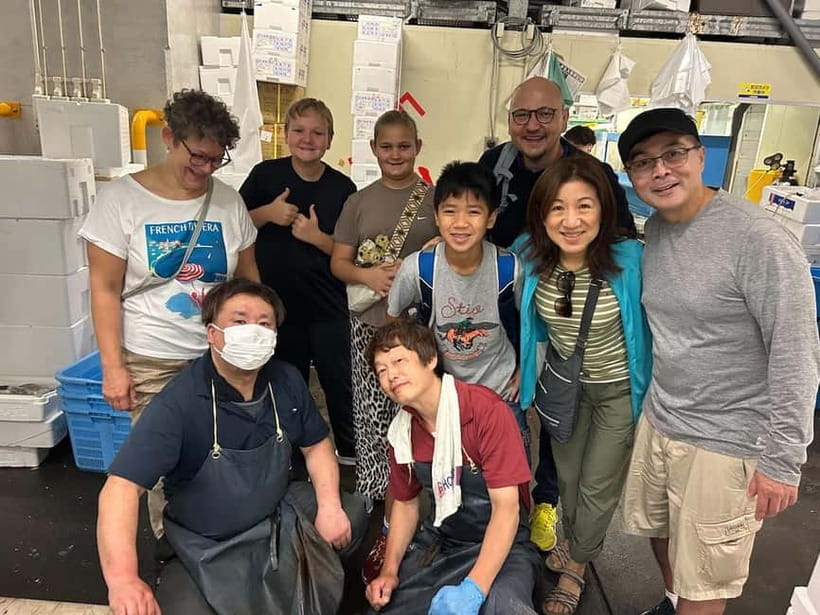
You are paying for more than a view from the gallery. The package includes a Japanese and English-speaking local guide, auction access according to your selected plan, a hand-signal lesson, the katsuobushi activity, tasting, the souvenir cup, photos with Okami-san using your own phone or camera, and a restaurant reservation.
The reservation may be the most useful part for some people. If Sushi Dai is already on your must-do list, avoiding a long wait and having the market visit arranged around it can justify part of the cost. The wholesale connection can also add value, particularly if you care about how seafood is handled rather than simply eating it.
The value is weaker if you only want a quick look at the auction and do not care about the food lesson or restaurant arrangement. You also need to budget separately for breakfast and transportation to Toyosu. Think of this as a guided market access package, not an all-inclusive food tour.
Timing, directions, and what to wear
The meeting point is at PR Square inside Toyosu Market, though it can vary by the option booked. Directions deserve care. Some visitors have found the pickup location unclear, so do not leave arrival until the last minute.
The stated start is 5:25 AM. Toyosu is large, and a late arrival could mean missing the auction or scrambling through the market while the group has already moved on. I would confirm the exact meeting point and route the day before.
For the regular option, public transportation may be possible depending on the timetable. VIP guests need to plan more carefully because they may have to arrive before public transportation is available. A taxi or walking route may be necessary.
Wear comfortable shoes and comfortable clothes. This is a working market, not a polished dining room, and the morning can feel long if you are tired or poorly dressed. Bring a camera, and carry cash for the breakfast bill and any other personal spending.
The tour is not suitable for wheelchair users because of the market setting and access arrangements. It is also not suitable for vegetarians, since the main subject and food tastings center on seafood.
Who will get the most from this morning
I would recommend this tour to you if you enjoy seeing how food reaches the plate. It suits people who want context, a guide who can answer questions, and a closer look at the commercial side of sushi.
It is especially useful for a first visit to Tokyo. The guide can help you make sense of an unfamiliar market, explain the auction gestures, and connect the tuna trade with the breakfast that follows. You also get practical Tokyo advice from guides who know the area well.
Food-focused visitors will find the strongest reason to book. The sashimi tasting, katsuobushi comparison, and choice of Bentomi or Sushi Dai give the morning more substance than a short photo stop.
I would hesitate if you dislike very early starts, want a relaxed breakfast with no extra bill, or need fully step-free access. I would also avoid booking solely for the fresh tuna auction, since that particular sale is not promised.
The private-group option may suit families or friends who want a more personal pace. If you want the ground-level deck, plan far ahead and confirm availability rather than assuming it will be open on your date.
Is the Toyosu tuna auction tour worth booking?
Book it if you want a guided look at Tokyo’s seafood trade, not just a famous photo. The strongest combination is the auction explanation, the chance to meet or watch a wholesaler, the bonito lesson, and a reserved breakfast at a respected market restaurant.
For the best value, confirm four things before you pay: your viewing level, your breakfast venue, the meal price, and the meeting point. If those details suit your budget, the tour gives you a focused morning with a strong sense of place.
Skip it if your priority is a cheap market visit or guaranteed close-up access to fresh tuna. For everyone else, especially sushi fans and curious first-time visitors, waking early can pay off with a rare look at the working heart of Tokyo’s seafood culture.
FAQ
What time does the tour start?
The tour starts early, at 5:25 AM. You should arrive on time because the auction begins before most public market activity is underway.
Where is the meeting point?
The stated meeting point is PR Square inside Toyosu Market. It may vary depending on the option you book, so check the exact instructions before departure.
How long does the experience last?
The tour lasts 150 minutes.
Is breakfast included in the $141 price?
No. The tour includes a reservation at Sushi Dai or Bentomi, but the meal fee is not included.
Can I choose between Sushi Dai and Bentomi?
The experience offers breakfast options at both restaurants, but Sushi Dai seating is extremely limited and available only with select tour plans. Confirm the restaurant connected to your booking.
What is the difference between the viewing options?
The standard option uses the 3rd-floor gallery for a broad view of the auction hall. The exclusive option uses a ground-level deck only a few meters from the action and is limited to four people.
How far ahead should I arrange the ground-level deck?
The provider recommends contacting Yummy Guide through Instagram, at @yummyguidejapan, about two months in advance.
Will I definitely see the fresh tuna auction?
No. The fresh tuna auction may be visible depending on the morning, but it is not guaranteed.
Is the tour offered in English?
Yes. Live guiding is available in English and Japanese.
Is the tour accessible for wheelchair users or vegetarians?
The experience is not suitable for wheelchair users or vegetarians.
Can I cancel the booking?
You can cancel up to 24 hours in advance for a full refund. A reserve-now, pay-later option is also available.
New VIP and luxury tours around Tokyo
- Tokyo Private Tour English Pro Guide By Luxury Vehicle★ 4.7 · 6 reviews
- Tokyo:Luxury Private Tour with English-Speaking driver★ 5.0 · 7 reviews
- Tokyo: Private Nikko Sightseeing Tour In Luxury Land Cruiser★ 4.1 · 8 reviews
- Tokyo: WARP SHINJUKU Nightclub Ticket with Drink / VIP Plan★ 4.2 · 55 reviews
- Tokyo: Private Makeover Photography Studio in Luxury Kimono★ 5.0 · 22 reviews
- Tokyo: Luxury Nikko Private 1 Day Tour Low Price Guaranteed★ 5.0 · 13 reviews
- Nikko in Style: Luxury private Day Tour with English guide★ 5.0 · 9 reviews
- Mt Fuji : Private 10-Hour Luxury Tour by Exclusive Car★ 3.8 · 13 reviews
More of the best Tokyo Luxury Tours
Tokyo:Luxury Sumo Show Experience & Japanese cuisine & Drink
Read our review →
From Tokyo: Mt Fuji Private Day Tour In Luxury Land Cruiser
Read our review →
Luxury van Ride to famous car meet up spot Daikoku
Read our review →
From Tokyo/Nagano: Luxury Snow Monkey Private Full-Day Tour
Read our review →
Tokyo: WARP SHINJUKU Nightclub Ticket with Drink / VIP Plan
Read our review →
Tokyo: Private Makeover Photography Studio in Luxury Kimono
Read our review →
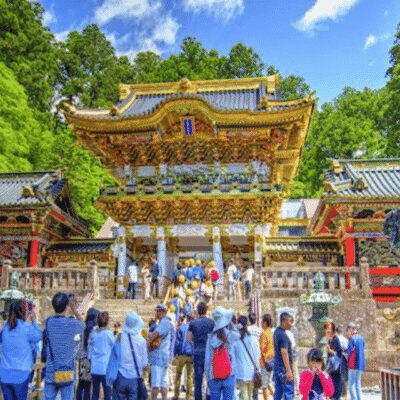
Tokyo: Luxury Nikko Private 1 Day Tour Low Price Guaranteed
Read our review →Lists this tour is ranked in