
Review · NEW DELHI
Private 4-Days Golden Triangle Luxury Tour From Delhi
The best reason to choose this tour is the sunrise visit to the Taj Mahal. You reach the monument before the main crowds, then continue through Agra, Jaipur, and Delhi with private transport and a local guide in each destination. It gives you a clear route through North India without the daily work of arranging cars, hotels, tickets, and city transfers.
I especially like two things here: the useful mix of famous sights and less usual stops, such as Panna Meena ka Kund and Gatore ki Chhatriyan, and the chance to shape the schedule around your own interests. The main drawback is the amount of time spent on the road, particularly the five-hour drive from Agra to Jaipur. This is a sightseeing tour with hotel comfort, not a slow, unhurried stay in each city.
Key points at a glance
- Taj Mahal before breakfast: Visit the mausoleum on a two-hour guided tour at sunrise, then return to the hotel for breakfast.
- Three major cities in four days: Cover Delhi, Agra, and Jaipur with a private car and separate local guides.
- Luxury hotel option: Three nights and daily hotel breakfast are included when you select the accommodation package.
- More than the standard checklist: See Panna Meena ka Kund, Gatore ki Chhatriyan, Agrasen Ki Baoli, and the Tomb of Itimad-ud-Daulah.
- Flexible private touring: Adjust the plan to suit your interests and schedule by contacting the provider ahead of time.
- Strong transport setup: Cars range from a four-seat sedan to a ten-seat minivan, depending on party size.
A practical Golden Triangle route with private support
India’s Golden Triangle links Delhi, Agra, and Jaipur in a route that packs Mughal monuments, royal palaces, observatories, stepwells, and modern Indian capital sights into a short trip. This four-day version is designed for visitors who want the major landmarks but prefer not to manage every transfer alone.
You are picked up at a hotel, airport, railway station, or another requested location in Delhi, Noida, or Gurugram. From there, the trip uses a private air-conditioned vehicle throughout. Groups of one or two travel in a four-seat sedan, groups of three or four use a six-seat wagon, and groups of five to ten use a ten-seat minivan.
That arrangement matters in India. You can leave bags in the vehicle during sightseeing, avoid negotiating separate taxis, and move between cities on your own schedule. Bottled mineral water is provided during the journeys, and the driver handles the long road sections while you concentrate on the scenery.
You receive a new local guide in each destination. That is useful because a Delhi guide can explain the capital’s landmarks, while an Agra guide can focus on Mughal architecture and a Jaipur guide can make sense of Rajput palaces and court customs. Guides named Raj and Dinesh have been praised in past bookings for their help and punctuality, though your assigned guides may be different.
More Luxury Multi-Day Tours in India
- 3-Days Private Golden Triangle Tour: Delhi, Agra & Jaipur by Car
★ 5.0 · 1,098 reviews - 3-Day Private Luxury Golden Triangle Tour to Agra and Jaipur From New Delhi
★ 5.0 · 424 reviews - 4-Days Private Golden Triangle Tour: Delhi, Agra & Jaipur by Car
★ 5.0 · 406 reviews
Day one: Delhi’s monuments before the expressway to Agra
The first day combines a half-day Delhi tour with the drive to Agra. The exact order can change, but the planned sights include Qutub Minar, the Lotus Temple, India Gate, Agrasen Ki Baoli, Parliament House, and the President’s Palace.
Qutub Minar is the most substantial historic stop. The soaring minaret was begun by Qutub-ud-din Aibek, and its carved surface rewards a closer look. You will not simply be ticking off a tall tower. The surrounding complex helps explain the early Islamic architecture of Delhi.
The Lotus Temple offers a different experience. Its white flower-shaped design belongs to the Bahai faith and welcomes people of all religions for quiet reflection. This is a good contrast to Delhi’s older stone monuments.
India Gate and the government district are viewed as part of the city tour. India Gate is a memorial arch, while the drive past Parliament House and the President’s Palace gives you a quick look at the ceremonial center of modern India. Agrasen Ki Baoli is a more intimate stop. Its deep stairway descends into the earth in a precise geometric pattern, making it one of the more memorable places on the Delhi portion.
After sightseeing, you take the expressway to Agra. The drive is about three and a half hours, so the first day is not light. You should treat Delhi as an introduction rather than expect a leisurely visit to every major museum and neighborhood.
On arrival in Agra, you check into the selected hotel and have time to rest. If you choose the hotel package, three nights of accommodation and breakfast are included. Rooms are normally arranged for two people sharing, with triple-sharing rooms provided for a booking of three. If three people want two rooms, an extra cash payment applies.
Day two: the Taj Mahal at sunrise and Agra’s Mughal story
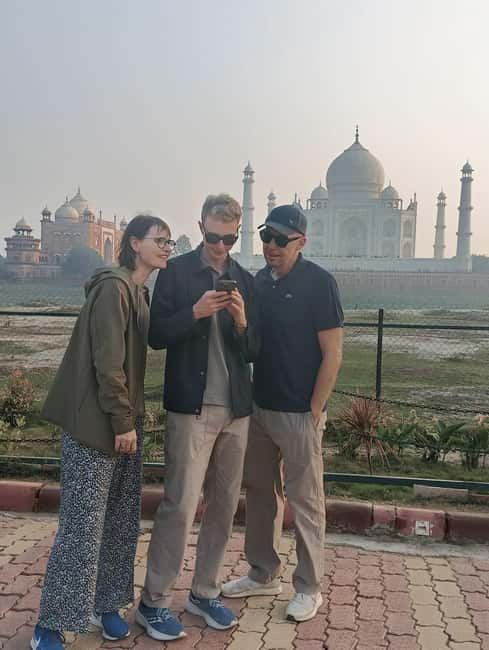
The early start is the centerpiece of the whole trip. You visit the Taj Mahal at sunrise, before the crowds build, then spend about two hours inside the monument with a private guide.
The early hour helps in two ways. The light changes the color and texture of the white marble, and the quieter setting makes it easier to take in the symmetry, gardens, reflecting pools, and fine stonework. One guest described the sunrise view as the most beautiful sight of a lifetime. That is a personal judgment, of course, but the timing is clearly one of the tour’s strongest choices.
A battery bus carries you between the Taj Mahal parking area and the monument. This avoids the final road section on foot and is included in the tour. You should still wear comfortable walking shoes, since the sightseeing itself involves time on your feet.
After the Taj Mahal, you return to the hotel for breakfast. This sequence is sensible. You see the monument at its best, then eat and rest before the later visits.
Agra Fort follows. The red sandstone complex served as a royal residence and defensive stronghold, with courtyards, audience halls, and views toward the Taj Mahal. It also adds needed context. The Taj is often treated as an isolated love monument, but Agra Fort shows the power, wealth, politics, and daily court life behind the building project.
The Tomb of Itimad-ud-Daulah is smaller and more delicate. It is often called the Baby Taj, though that nickname can undersell the monument. Its marble decoration and detailed inlay work offer a closer, more decorative contrast to the Taj Mahal’s grand scale.
Later, the vehicle heads to Jaipur. The drive takes about five hours. This is the most demanding road transfer of the itinerary, and you should expect the day to feel full. The private car makes the journey easier, but it does not make the distance disappear.
Day three: Amber Fort, stepwells, palaces, and observatory science
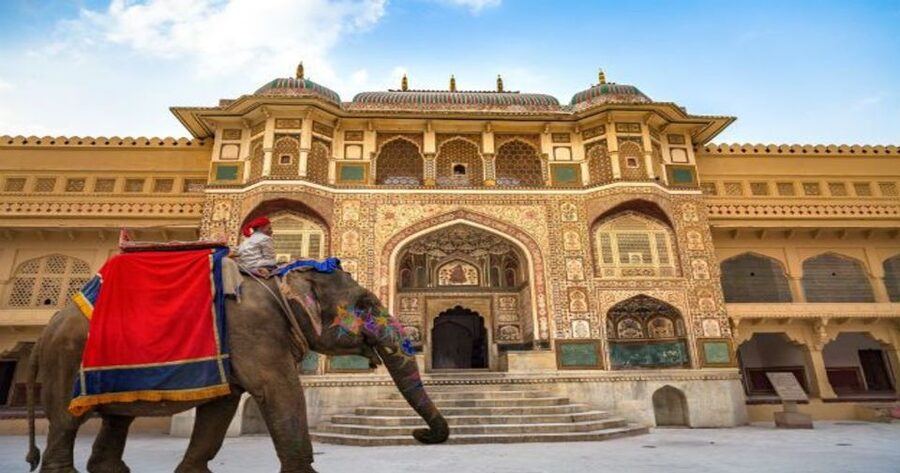
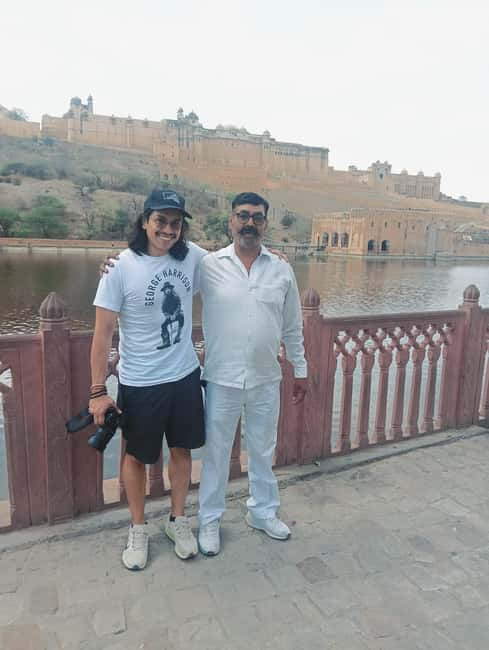
Jaipur’s sightseeing begins with Amber Fort, outside the center. The hilltop setting gives the complex a dramatic arrival, while the courtyards and palace spaces show the power of the former Rajput rulers.
Before the fort, you stop at Panna Meena ka Kund. This ancient stepwell is known for its symmetrical staircases, which form a strong geometric pattern as they descend. It is a worthwhile addition because it offers a quieter, more focused view of traditional water architecture before the larger fort visit.
Jal Mahal comes next. The palace appears to float in the middle of Man Sagar Lake. The visit is generally about viewing the building from outside rather than touring its interior, but the setting makes it a useful photo stop and a change of pace after Amber Fort.
Gatore ki Chhatriyan is another less predictable stop. The site contains carved cenotaphs for Jaipur’s former rulers, with domed memorial structures and detailed stonework. If you prefer architecture to shopping, this is the sort of addition that makes the private itinerary more rewarding than a basic city transfer.
In the city, Hawa Mahal, or the Palace of the Winds, is one of Jaipur’s signature sights. Its many windows and screened openings allowed royal women to watch street life without being seen. The facade is the famous part, so your guide can help you understand why the building looks more like a delicate screen than a conventional palace.
Jantar Mantar shifts the focus from royal display to astronomy. The open-air observatory contains large stone instruments used to measure time and track the sky. It can seem abstract without an explanation, so this is a stop where a good guide adds real value.
The day ends at Maharaja’s City Palace. The complex combines courtyards, palace buildings, decorative details, and royal collections. Since this is a private tour, you can ask the Jaipur guide to spend more time on the areas that interest you most, within the available schedule.
You return to the Jaipur hotel for the night. The range of stops makes this the busiest sightseeing day, so do not plan it as a relaxed stroll. Sun protection, water, and sensible shoes will help.
More Luxury Multi-Day Tours in New Delhi:
- Private Luxury Delhi – Agra – Jaipur Golden Triangle Tour – 3 Nights 4 Days
★ 5.0 · 306 reviews - 5 Day Private Luxury Golden Triangle trip Agra &Jaipur from Delhi
★ 5.0 · 259 reviews - From Delhi: Private 4-Day Golden Triangle Luxury Tour
★ 4.8 · 226 reviews - From Delhi: Private 3-Day Golden Triangle Luxury Tour
★ 4.9 · 56 reviews
Day four: the long return to Delhi

After breakfast, you drive back to Delhi. Drop-off is available at the airport, a railway station, or your hotel.
The final day is mainly a transfer day, not another major sightseeing day. That is important when planning flights. The tour does not provide a fixed arrival time in the information supplied, so leave plenty of space before an international departure and confirm the expected road schedule with the provider.
If you have extra time in Delhi, ending at a hotel rather than the airport gives you more flexibility. If you are flying out, an early departure from Jaipur is the safer plan.
What the luxury option really gives you

Luxury here means private transport, selected luxury accommodation, hotel breakfasts, local guides, and personal assistance rather than a fully all-inclusive experience. Monument entrance fees are not included, and tips for guides are separate.
The displayed price of $8 per person is unusually low for a four-day private trip with hotels and multiple city transfers. Treat it as a starting price and confirm exactly which option you are selecting. The tour also offers a version without hotel bookings, which may explain part of the price difference. Ask before paying whether the displayed amount includes the hotel category, vehicle size, and all parts of your preferred arrangement.
The value is strongest for people who would otherwise need to arrange three hotels, several long-distance rides, airport or railway transfers, and guides in three cities. The cost of those pieces can add up quickly. The private format also gives you more control than a large coach tour, even though the sightseeing route remains busy.
Monument tickets are paid separately. Some sites may not accept credit cards, so carry cash. Guides can help you buy tickets, and the driver can help you find an ATM if needed. This is a small but important detail. Do not assume every admission counter works like a major international attraction.
Who this four-day tour suits best

I would choose this trip if you want a first look at North India and value clear arrangements over free time. It suits couples, families, small groups, and solo visitors who prefer a private car and local help at each major sight.
It is also a good fit if you want the Taj Mahal at sunrise but do not want to plan the Agra hotel, transfer, guide, and return route yourself. The multilingual guide options include English, Hindi, French, Japanese, Spanish, German, and Italian.
You may want a longer trip if you dislike early mornings, long drives, or tightly packed sightseeing. Delhi receives only part of one day, and Jaipur receives one main sightseeing day. There is little spare time for shopping, museums, neighborhood walks, or spontaneous detours unless you arrange changes ahead of time.
The itinerary can be adjusted to your interests and schedule, but do not assume every change is automatic. Contact the provider before the trip with your priorities. If you want more time at Amber Fort, a different Delhi stop, or less time at a particular monument, settle that in advance.
Should you book it?
Book this tour if you want the Golden Triangle’s major monuments in four days, with a private vehicle, early Taj Mahal access, local guides, and the option of hotel support. The sunrise visit, Agra Fort, Amber Fort, Hawa Mahal, and the less common Jaipur and Delhi stops create a strong first visit.
Think twice if your ideal India trip moves slowly. The Agra to Jaipur drive takes about five hours, the return to Delhi is another long road day, and the sightseeing schedule is full. Before booking, confirm the exact hotel package and the unusually low displayed price, then budget separately for monument tickets and tips.
FAQ

How long is the tour?
The advertised experience can range from two hours to four days, but this private Golden Triangle itinerary is planned as a four-day trip covering Delhi, Agra, Jaipur, and the return to Delhi.
Where can pickup and drop-off take place?
Pickup is available from a hotel, airport, railway station, or another requested location in Delhi, Noida, or Gurugram. On the final day, drop-off can be at an airport, railway station, or hotel in Delhi.
Are hotels included?
Three nights of accommodation are included only when you choose the hotel option. You can also select an option without hotel bookings and arrange your own accommodation.
Is breakfast included?
Daily hotel breakfast is included when you choose the accommodation package.
Are monument entry tickets included?
No. Monument entry tickets are separate. Some monuments may not accept credit cards, so carry cash. Guides can help with ticket purchases.
What type of vehicle is used?
Groups of one or two use a four-seat sedan. Groups of three or four use a six-seat wagon, and groups of five to ten use a ten-seat minivan. All vehicles are air-conditioned.
Which languages are available for the guides?
Guides are available in English, Hindi, French, Japanese, Spanish, German, and Italian. A new local guide is assigned in each destination.
Is the tour suitable for wheelchair users?
The activity is listed as wheelchair accessible. You should still discuss your exact mobility needs with the provider before departure, especially for the different monuments and vehicle arrangements.
New VIP and luxury tours around New Delhi
- From Delhi: Taj Mahal & Agra Fort Luxury Tour with 5* Lunch★ 5.0 · 13 reviews
- From Delhi: Private 3-Day Golden Triangle Luxury Tour★ 4.9 · 56 reviews
- From Delhi: Private 4-Day Golden Triangle Luxury Tour★ 4.8 · 226 reviews
- From Delhi: 5 Days Private Luxury Golden Triangle Tour★ 3.7 · 10 reviews
- From Delhi Exclusive Taj Mahal Private Tour with Luxury Car★ 5.0 · 21 reviews
- Agra: Taj Mahal Vip tickets with Professional Photographer★ 3.6 · 5 reviews
- 5 Day Private Luxury Golden Triangle trip Agra &Jaipur from Delhi★ 5.0 · 259 reviews
- Private Luxury Delhi – Agra – Jaipur Golden Triangle Tour – 3 Nights 4 Days★ 5.0 · 306 reviews
More of the best New Delhi Luxury Tours

All Inclusive Private Taj Mahal Luxury Tour from Delhi by Car
Read our review →
3-Days Private Golden Triangle Tour: Delhi, Agra & Jaipur by Car
Read our review →
Four-Day Private Luxury Golden Triangle Tour to Agra and Jaipur From New Delhi
Read our review →
Private Luxury Delhi – Agra – Jaipur Golden Triangle Tour – 3 Nights 4 Days
Read our review →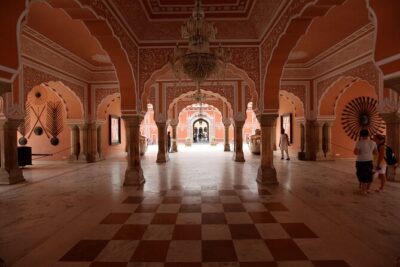
5 Day Private Luxury Golden Triangle trip Agra &Jaipur from Delhi
Read our review →
From Delhi: Private 4-Day Golden Triangle Luxury Tour
Read our review →
From Delhi Exclusive Taj Mahal Private Tour with Luxury Car
Read our review →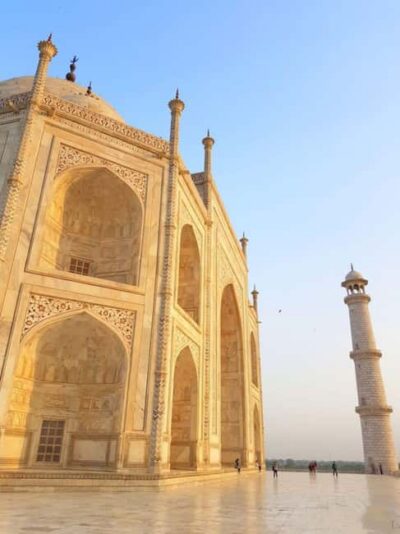
From Delhi: Taj Mahal & Agra Fort Luxury Tour with 5* Lunch
Read our review →Lists this tour is ranked in