
Review · AMSTERDAM
Amsterdam: Luxury Canal Cruise with Historic VR Experience
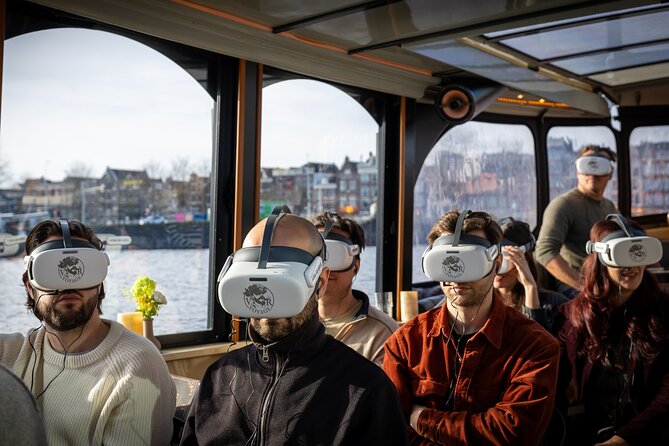
Amsterdam becomes especially fascinating when you can compare the canal in front of you with the same stretch of water four centuries ago. This tour pairs a 75-minute enclosed canal cruise with seven short VR scenes that show Amsterdam during its 17th-century trading boom.
I like the warm boat, the clear past-and-present comparison, and the way the 15-minute VR program is spread across the cruise instead of taking over the whole outing. The main drawback is language and sound: the spoken tour is offered only in English or Dutch, and some English explanations may be hard to hear.
Key points at a glance
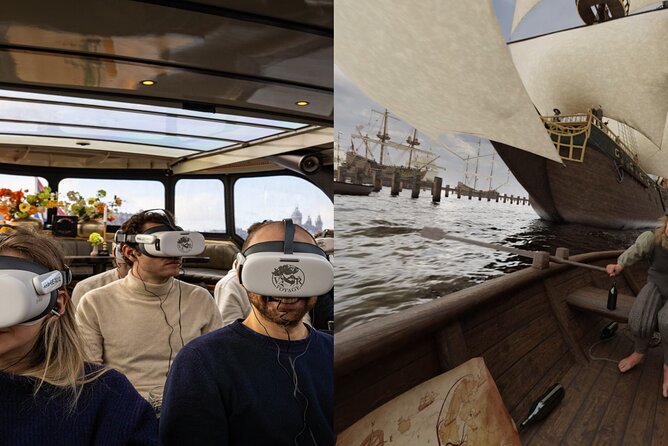
- Seven VR stops connect today’s canal to 17th-century Amsterdam, including elite homes, warehouses, a harbor, a shipyard, and the old city wall.
- The boat is enclosed and heated, a useful feature on a chilly or rainy Amsterdam day.
- The regular audiotour runs with the headset off, so you can keep watching the modern city between VR scenes.
- One drink is included, while extra drinks and food cost more.
- The experience lasts 75 minutes, with about 15 minutes devoted to the historic VR program.
- English and Dutch are available, but more languages are not yet offered.
A modern canal ride with an old Amsterdam hiding underneath
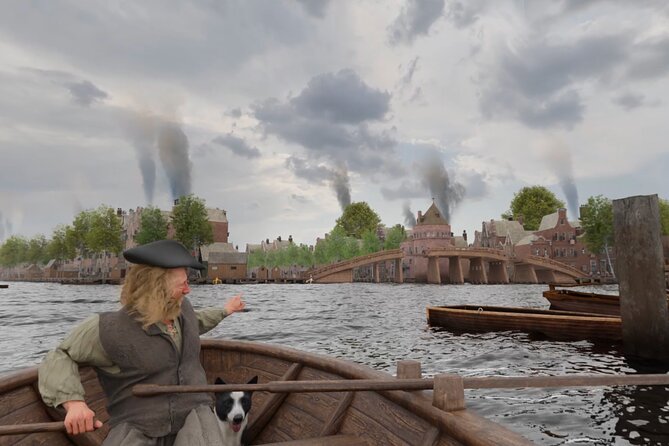
Most canal cruises show you Amsterdam as it looks now: narrow houses, bridges, houseboats, busy quays, and grand canal-side buildings. This one asks you to look again. At seven points along the route, you put on a VR headset and see the same area as it may have looked 400 years ago.
That idea gives the ride a clear purpose. You are not simply passing old buildings while a voice lists dates. You are shifting between two versions of Amsterdam, then returning to the present to notice what changed and what survived.
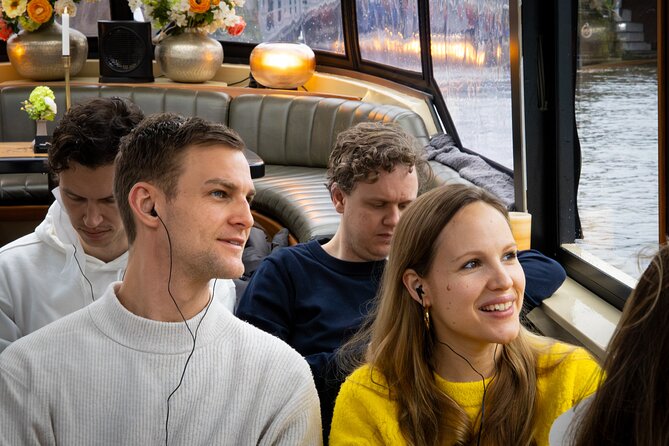
The boat itself is designed for comfort. It is enclosed and described as luxurious, with warmth that matters during Amsterdam’s colder months. The covered setting also makes the cruise less dependent on good weather. You still get views through the windows, but you do not need to spend 75 minutes sitting in wind or rain.
The experience costs $50 per person. That is more than a basic canal ride, but the price includes the cruise, the audio program, the historic VR segments, and one drink. I see the value most clearly if you want a history-focused outing rather than a simple sightseeing loop. If you only want photos from an open boat, a cheaper cruise may suit you better.
More Luxury Boat Tours in Amsterdam:
- Amsterdam Luxury Canal Cruise + Unlimited Drinks & Bites option
★ 5.0 · 30,518 reviews - Amsterdam: Luxury Saloon Boat Cruise with Cocktails & Waffle
★ 5.0 · 5,935 reviews - Amsterdam: Luxury Saloon Boat Cruise with Cocktails & Waffle
★ 4.6 · 4,393 reviews
Seven windows into the 17th century
The VR program takes about 15 minutes in total. That means each scene is short, which works well for a moving cruise. You get a sequence of focused historical views rather than one long virtual presentation.
The storyline connects the audio and the VR scenes. You first see the modern surroundings, then the headset gives you a visual reconstruction of that same setting. The historical neighborhoods and scenes are presented as accurate to their period, so the effect is meant to be more than a decorative animation.
Here is what the seven scenes cover.
Elite homes along the canals
One scene shows where Amsterdam’s wealthy residents lived. This helps explain why the city’s canals were not just transport routes. They were also addresses that displayed money, status, and access to trade.
The VR view can give you a better sense of the setting than a modern facade does. Amsterdam’s canal houses remain striking, but later changes, renovations, and traffic can make it hard to picture daily life in the 17th century. Seeing the area in its earlier form gives the grand houses a social setting.
A major trading location
Another scene focuses on an important trading point and explains how warehouses were used. This is one of the most useful parts for understanding Amsterdam’s growth. The city’s wealth depended on goods moving through its waterways, and storage space was a key part of that system.
Look for the connection between the water, the buildings, and the work taking place around them. The VR sequence should help you picture a canal as a working part of the city rather than only a pretty route for sightseeing.
More history with a private guide around Amsterdam:
- Amsterdam: Luxury Canal Cruise with Historic VR Experience
★ 5.0 · 305 reviews - Halong Heritage Luxury Day Cruise-Buffet lunch&Limousine transfer
★ 5.0 · 846 reviews - Chicago: Field Museum of Natural History Ticket or VIP Tour
★ 4.7 · 717 reviews - Private Luxury Tour: Marathon – Battle & Run That Changed History
★ 5.0 · 30 reviews
The harbor and its ships
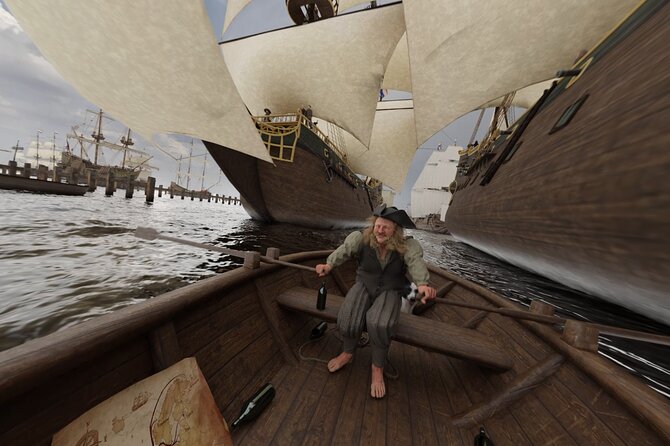
The historic harbor scene shows hundreds of ships. That image gives the scale of Amsterdam’s maritime trade in a way that modern canal traffic cannot.
The contrast should be striking. Today, you may see sightseeing boats and ordinary city movement. The VR view shifts the focus to a harbor crowded with vessels and tied to a much larger commercial network. This is one of the moments when the technology serves the history well, because a busy harbor is difficult to recreate with a few surviving buildings.
The shipyard where warships were built
The tour also visits the setting of an important shipyard. Warships were built there, showing that Amsterdam’s maritime strength involved more than merchant cargo.
This scene adds a military side to the story. It connects the city’s waterways with shipbuilding, naval power, and the practical work behind the period’s famous ships. You are given a look at an industrial space that may be far less visible in the modern city.
The city’s outer edge and five-meter wall
A later scene takes you toward the outskirts of Amsterdam and shows a city wall five meters high. This is a useful reminder that the historic city had a defined edge.
Modern Amsterdam spreads well beyond its old center, so it can be hard to picture where the city ended. The wall gives the earlier city a sense of scale and protection. It also helps tie the separate scenes together: homes, trade, harbor, shipyard, and defensive limits all belonged to one growing urban system.
The remaining scenes add to this picture, though the available details do not identify every location by name. The important point is that the VR is tied to places you are passing, not shown as a separate film unrelated to the cruise.
How the 75-minute program works
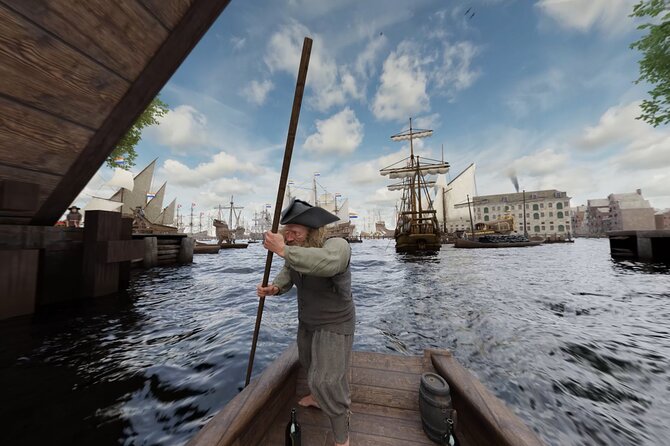
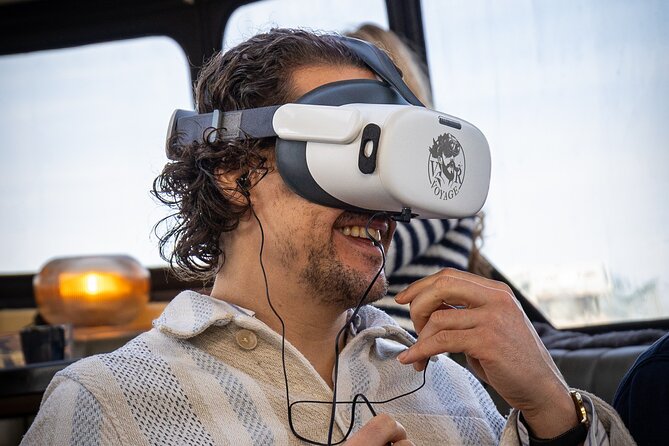
The regular audio plays in English or Dutch while the VR headset is off. At seven locations, you put on the headset for the historic view. After the short animation, the tour returns to the present-day canal ride and continues the story.
That rhythm is one of the strongest parts of the design. A full 75 minutes in VR would be tiring and would make you miss Amsterdam itself. Here, the virtual material acts as a series of historical pauses. You spend most of the ride looking at the real city, then use the headset when the story reaches a key point.
You should expect some practical interruption when the headset is handed out or removed. The VR portion totals only about 15 minutes, so it is not an all-day technology session. If you are sensitive to headsets, the short length may be easier than a long virtual attraction, though the supplied information does not specify how the equipment feels for every passenger.
The program is available in English and Dutch. More languages are planned, but they are not currently listed as available. If you need another language, check before booking rather than assuming the visual scenes will carry the full story on their own.
Sound quality matters here. The spoken material carries the main explanation, and one piece of feedback specifically called for better English audio. Another noted that the host explained too much in English for a Dutch-speaking passenger and suggested giving information equally in both languages. I would treat this as a real consideration if hearing clear narration is important to you.
What the enclosed boat adds
Amsterdam’s canals are enjoyable in almost any season, but the weather can be damp, cold, and changeable. The enclosed boat gives you a more sheltered way to see the city, and the warmth was specifically praised in the available feedback.
That comfort comes with a tradeoff. An enclosed boat may not provide the same open-air feeling or unobstructed photo angles as an open vessel. You will likely be looking through windows for much of the cruise. For a wet winter afternoon, I would favor the enclosed boat. On a bright, mild day, you may prefer an open deck if photography is your main goal.
The boat is wheelchair accessible, which makes this option more practical than some historic canal vessels. The information does not specify the exact boarding arrangements or restroom setup, so you should confirm any detailed mobility needs before departure.
A guide checks you in at the jetty next to Lido Bar & Kitchen. Plan to walk to the waterfront meeting point rather than expecting to board from a large terminal. The tour guide handles the check-in, while the audio and VR provide most of the scheduled content.
The included drink and the real value of $50
One drink is included in the price. That is a small benefit, but it makes the cruise feel more complete and gives you something to enjoy while watching the canals. Food and extra drinks are not included, so do not treat the ticket as a meal package.
At $50, the tour is best judged against the type of experience you want. A standard canal ride may cost less and give you a longer stretch of uninterrupted city views. This tour adds the VR technology and a structured historical story, so you are paying for interpretation as well as transport and sightseeing.
I think the price works for three kinds of people:
- You want a first look at Amsterdam with more context than a basic boat loop.
- You are interested in how the city looked during its trading peak.
- You want a weather-protected activity that combines sightseeing with a short technology feature.
The value is weaker if you already know Amsterdam’s history well, dislike headsets, or mainly want an open-air photography cruise. The 75-minute duration is also long enough to require a clear commitment, but short enough to fit neatly into a day of city sightseeing.
Who should book this experience
This tour suits adults and older children. Children under eight are not permitted, and people over 80 are not accepted according to the activity rules. Those limits may reflect the VR equipment, the enclosed boat, or the operator’s safety policy, but the supplied details do not give a specific reason.
I would recommend it to couples, families with children aged eight and over, and anyone who likes history presented in a visual way. The past and present format can help if you find ordinary audio tours too abstract. You do not need to know Amsterdam’s history before boarding.
It also works well for a first day in the city. The cruise shows you several historic themes quickly, including wealth, trade, shipping, defense, and urban growth. You can then decide which parts of Amsterdam deserve a closer look on foot.
Dutch speakers should be aware of the language balance. The audiotour is offered in Dutch, but the host may give some explanations in English. English speakers can join comfortably, though the audio quality may not satisfy everyone. If you rely heavily on narration, sit where you can hear the guide and ask about the language setup at check-in.
The tour received a 4.7 rating from 31 ratings, with especially positive reactions to the friendly welcome, the warm boat, and the way the historical concept is put together. I would give the strongest weight to those repeated practical points, while keeping the sound and language concerns in mind.
A few ways to get more from the ride
Arrive ready to pay attention to the present-day surroundings before putting on the headset. The VR scenes work best when you first notice the real canal, buildings, and waterfront in front of you.
Keep the headset off during the regular audio portion. The tour is designed around that pattern, and you will miss part of the current-day experience if you treat the ride as a continuous VR show.
If you want photos, take them during the modern sections. The headset scenes are short and are intended for viewing, not for photographing through the equipment. An enclosed boat is comfortable, but window reflections may affect pictures.
Use the included drink as a pause rather than expecting food service. If you need a meal, plan it before or after the cruise, since food and extra drinks are not part of the ticket.
Finally, check the language and cancellation terms when booking. You can cancel up to 24 hours before departure for a full refund, and the reserve-now, pay-later option keeps your plans flexible.
Should you book this Amsterdam canal cruise?
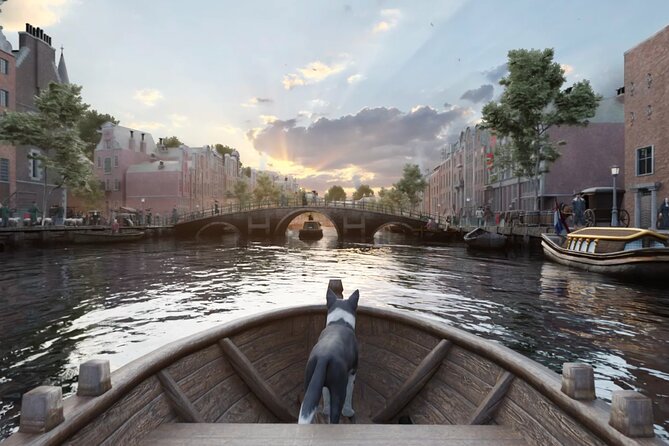
Book it if you want more than a scenic boat ride. The strong idea here is simple: see Amsterdam now, then see the same setting 400 years ago. The warm enclosed boat, one included drink, seven historical VR scenes, and 75-minute length make it a tidy, weather-friendly introduction to the city.
Skip it if your priority is open-air views, perfect English sound, or a long uninterrupted cruise. The language options are limited, and the audio may be the weakest part for some passengers.
For most first-time visitors who enjoy history and do not mind wearing a headset, I think the $50 price is reasonable. It gives you a clear story, a comfortable ride, and a useful sense of how Amsterdam grew from a fortified trading city into the place you see today.
FAQ
How long does the Amsterdam VR canal cruise last?
The cruise lasts 75 minutes. About 15 minutes of that time is devoted to the 17th-century VR experience.
What languages are available?
The audiotour and VR experience are available in English and Dutch. More languages are planned, but they are not currently listed as available.
How many VR scenes are included?
The tour includes seven VR scenes at different points along the canal route.
What does the VR experience show?
It shows the area around you as it may have looked 400 years ago, including elite homes, a trading location, warehouses, a harbor with hundreds of ships, a shipyard where warships were built, and Amsterdam’s outskirts with a five-meter-high city wall.
Is a drink included?
Yes. One drink is included. Extra drinks and food are not included.
Where is the meeting point?
Walk to the jetty next to Lido Bar & Kitchen. A tour guide checks you in there.
Is the boat wheelchair accessible?
Yes, the activity is listed as wheelchair accessible. For detailed boarding questions, confirm the arrangements before departure.
New VIP and luxury tours around Amsterdam
- Amsterdam: Luxury Canal Cruise with Historic VR Experience★ 5.0 · 305 reviews
- Volendam & Marken Private Tour in luxury Jaguar S Type 1/2 day★ 5.0 · 6 reviews
- Zaanse Schans, Edam, Marken & Volendam – Private Luxury Tour★ 4.5 · 14 reviews
- Amsterdam Breakfast Cruise on Private Luxury Boat★ 5.0 · 5 reviews
- Rembrandt Experience VIP Admission Ticket + Photo★ 4.5 · 28 reviews
- VIP Amsterdam Airport Departure Transfer★ 5.0 · 5 reviews
- Amsterdam Light Festival: Cruise Unlimited Drinks & Bite option★ 5.0 · 18 reviews
- Amsterdam Light Festival: Canal Cruise + Bite & Unlimited Drinks★ 4.5 · 20 reviews
More of the best Amsterdam Luxury Tours
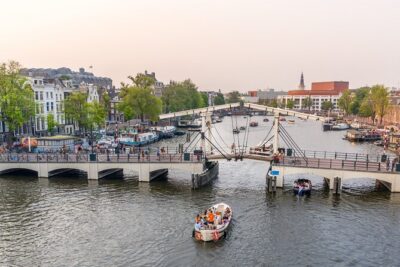
Amsterdam Luxury Canal Cruise + Unlimited Drinks & Bites option
Read our review →
Amsterdam: Luxury Saloon Boat Cruise with Cocktails & Waffle
Read our review →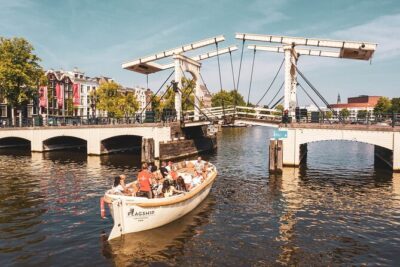
Amsterdam: Saloon Boat Cruise + Unlimited Drinks & Bite option
Read our review →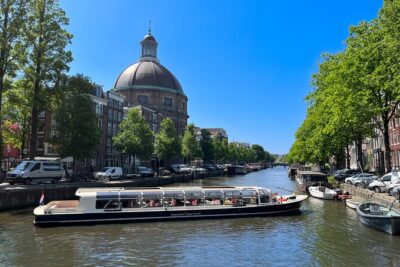
Discover Amsterdam: Luxury Canal Cruise with a Local Skipper
Read our review →

Amsterdam: Exclusive Heineken Experience VIP Tour Ticket
Read our review →
Amsterdam Classic Saloon Boat Canal Cruise with Live Guide
Read our review →
Amsterdam: Luxury Boat Cruise Unlimited Cocktails, Beers & Wines
Read our review →Lists this tour is ranked in