
Review · ATHENS
Private Luxury Tour: Unveiling the Sacred Mysteries of Eleusis
The most unusual part of this private tour is that Eleusis begins before you reach Eleusis. You follow pieces of the Sacred Way, the ancient route used by pilgrims leaving Athens for the rites of Demeter and Persephone. Along the way, old bridges, a Byzantine monastery, and scattered sanctuary remains help turn a familiar day trip into a story with a clear beginning, middle, and end.
I like the easy private transport and the way the route gives the Eleusinian Mysteries a physical setting. I also like the chance to see Daphni Monastery and several lesser-known archaeological points instead of driving straight to the main site. The main consideration is that your driver is not a licensed guide inside the archaeological monuments, so you will need to explore the site and museum largely on your own.
Key points
- Follow the ancient Sacred Way: See fragments of the road and bridges that linked Athens with Eleusis.
- Visit Daphni Monastery: A UNESCO World Heritage Site with major Byzantine mosaics and a striking Christ Pantocrator.
- Travel privately: Groups of one to four use a luxury sedan, while groups of five to seven ride in a minivan.
- Hear the mythology on the road: The driver-guide explains Demeter, Persephone, Hades, and the purpose of the Eleusinian rites.
- Reach the heart of Eleusis: Explore the Telesterion, Great Propylaea, Kallichoron Well, Ploutonion, and museum.
- Plan for extra costs: Archaeological admission is not included and is listed at €10 per person. A licensed guide inside the sites is also extra.
Why Eleusis Makes a Worthwhile Athens Excursion
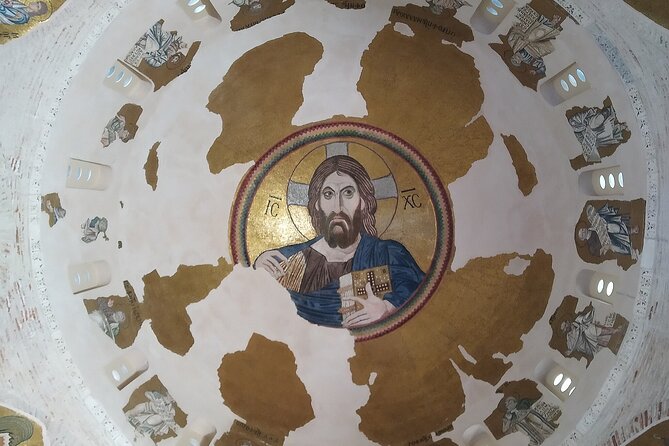
Eleusis is not simply another collection of Greek ruins. It was one of the ancient world’s most important religious centers, a place where initiates took part in secret ceremonies connected with Demeter, Persephone, death, and renewal.
The sanctuary sits west of Athens, and the journey matters. Ancient pilgrims did not arrive by coach in a single hop. They walked the Sacred Way, carried sacred objects, paused at ritual points, and crossed waterways on the route to Eleusis. This tour uses the modern road to recreate that sequence as closely as the surviving remains allow.
You get a private vehicle, hotel or cruise-port pickup, bottled water, air conditioning, and Wi-Fi. That matters in warm Greek weather, especially when several stops involve outdoor walking. The vehicle also saves you from trying to connect scattered sites by public transport.
The tour costs $192.23 per person. That is a serious price for a half-day outing, but it includes private transportation, a driver with extensive historical knowledge, pickup and drop-off, and a vehicle matched to your group. The value improves for a small group that would otherwise need several taxis or a private car service. Remember to add the €10 archaeological admission fee, plus any tip and the cost of a licensed guide if you want guided commentary inside the monuments.
More Private Luxury Tours in Greece
- Half Day Best Of Athens Highlights Luxury Private Tour 4Hou
★ 4.7 · 210 reviews - Private Luxury Biblical Tour: Apostle Paul in Athens & Corinth
★ 5.0 · 162 reviews - Athens AirPort To Athens Hotels Luxury Private Transfer Service
★ 4.5 · 161 reviews
Starting Along Iera Odos in Athens
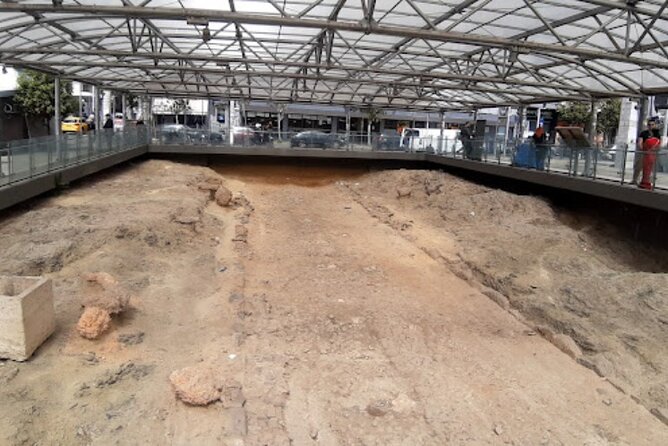
The first stop is a remnant of the Sacred Way near the modern Eleonas Metro Station. During construction, workers found three surviving piers from an ancient arched bridge over the Kifisos River. The remains suggest a bridge with at least five arches.
You will spend about ten minutes here. It is not a grand ruin, and you should set your expectations accordingly. This is a fragment beside a modern city, not a complete ancient bridge waiting in open countryside. Its value comes from the connection it gives you to the route itself.
Thousands of pilgrims passed this crossing on their way to Eleusis. The bridge carried practical traffic as well as sacred processions, so it links daily movement with religious ceremony. I find that useful context. It reminds you that ancient sanctuaries were connected to working roads, rivers, farms, and towns, not isolated museum pieces.
A second short stop in the Aigaleo area gives you another look at the Sacred Way. Here, the focus is less on a single structure and more on the route taken by worshippers carrying sacred items and singing hymns.
These opening stops work best when your driver-guide explains what you are seeing. Guides named Demetrios and Pericles have been praised for giving a clear sense of the complete journey and for making extra stops along the way. Your exact driver may differ, but the private format allows room for questions and explanation.
Daphni Monastery and Its Byzantine Mosaics
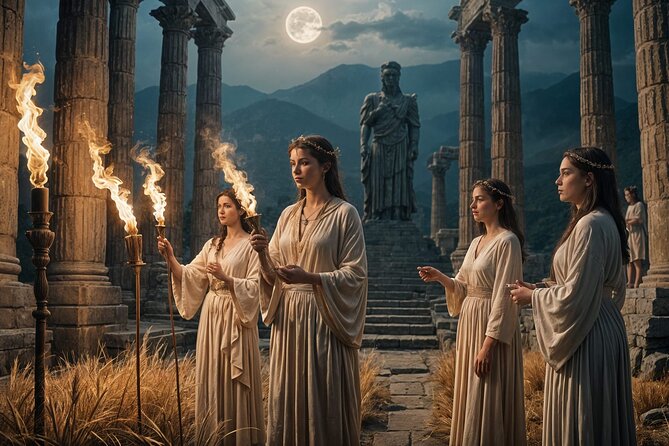
Daphni Monastery is one of the strongest stops before Eleusis. Built in the 11th century, it sits along the Sacred Way and brings a later layer of Greek religious history into the trip.
The monastery is a UNESCO World Heritage Site, known especially for its Byzantine mosaics. The central image of Christ Pantocrator in the dome is the main visual reward. Ancient Eleusis is connected to pagan ritual, while Daphni reflects the Christian world that later shaped the region. Seeing both in one morning gives the route a broader sense of time.
You will have about 30 minutes here. That is enough for a focused visit, but not a long architectural study. Check the day’s access arrangements when booking, since the tour information gives more specific access notes for some other stops but not a detailed monastery schedule.
This is also a calmer pause after the urban archaeological fragments. Cypress trees and the monastery setting offer a change of pace before the tour continues toward the coast and Eleusis. Wear practical shoes, since the outing includes repeated walks over uneven archaeological ground.
Aphrodite’s Sanctuary at Skaramagkas
The Sanctuary of Aphrodite near Skaramagkas is a brief but intriguing stop on the route. It was dedicated to Aphrodite and located near the Sacred Way used by pilgrims traveling from Athens to Eleusis.
The remains are limited, so this is not a major standalone attraction. Its importance comes from the way it adds another religious site to the route. The journey to Eleusis passed through a world filled with shrines, sanctuaries, bridges, and ritual landmarks.
Access depends on the day. The interior is open to the public on weekends. On weekdays, you cannot enter, but the driver makes a short outside stop for photographs and a look at the remains. If seeing the interior matters to you, schedule the tour for a weekend and confirm the opening arrangement before you go.
This is a good example of the tour’s balance. You see more than the famous central sanctuary, but some points are small and may feel less rewarding if you prefer large, intact monuments.
More Private Luxury Tours in Athens:
- Private Luxury Biblical Tour: Apostle Paul’s Footsteps – Corinth
★ 5.0 · 148 reviews - Athens Private Luxury Catamaran Cruise with Traditional Greek Meal and BBQ
★ 5.0 · 106 reviews - Private Luxury Tour: Athens Acropolis & Iconic City Highlights
★ 5.0 · 48 reviews - Mycenae Epidaurus Nafplio Isthmus Canal Private Luxury Tour
★ 5.0 · 43 reviews
The Roman Bridge Near Eleusis
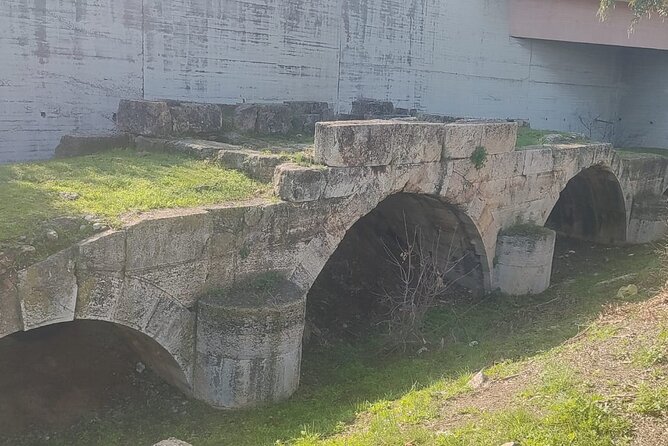
About one kilometer east of the Sanctuary of Demeter is a well-preserved Roman bridge built during the reign of Emperor Hadrian, around 125 AD. It measures about 50 meters long and 5.30 meters wide, with four arches and sloping approaches.
You get roughly ten minutes here. The stop is short because the bridge is mainly an exterior viewing point, but its design is easy to understand. Two wider central arches are flanked by two narrower ones, and the Piraeus limestone has survived impressively.
The bridge connected the Sacred Way with the Eleusinian Kephisos River. That practical role matters. It shows how the pilgrimage route depended on solid Roman engineering, not just religious devotion. If you enjoy ancient infrastructure, this may be one of the most satisfying smaller stops on the trip.
Entering the Sanctuary of Demeter at Eleusis
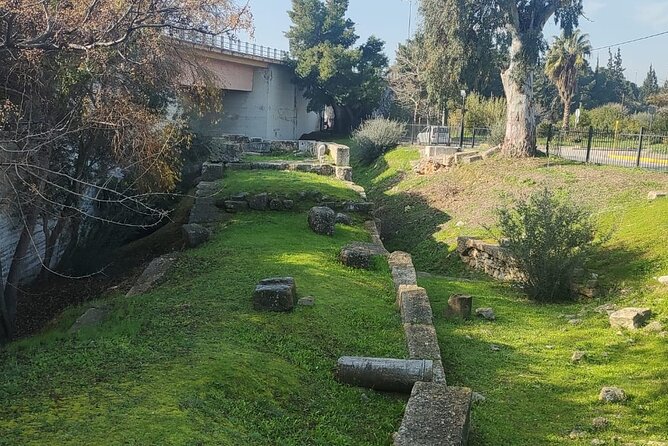
The main visit is the Archaeological Site and Museum of Eleusis. You receive about 30 minutes for the principal site visit, followed by short stops at several key areas and another 30 minutes for the museum.
Thirty minutes is not a long time for a sanctuary of this importance. You can see the main structures and get a strong introduction, but you will not study every wall, inscription, and artifact. If you want a slow archaeological visit, ask in advance how much the private schedule can be adjusted. The total experience lasts about four to five hours, including driving between locations.
The site is tied to the Eleusinian Mysteries, sacred rites honoring Demeter and Persephone. Because the ceremonies were secret, ancient writers left only partial clues. That uncertainty is part of the appeal, but it also means a visit cannot provide a complete ritual script. Instead, the ruins and museum help you understand the setting, the gods, and the importance of initiation.
Bring water, a hat, sunscreen, and comfortable footwear. Much of the experience is outdoors, and Greek sun can be strong even when the temperature feels manageable in the vehicle.
The Telesterion, Heart of the Mysteries
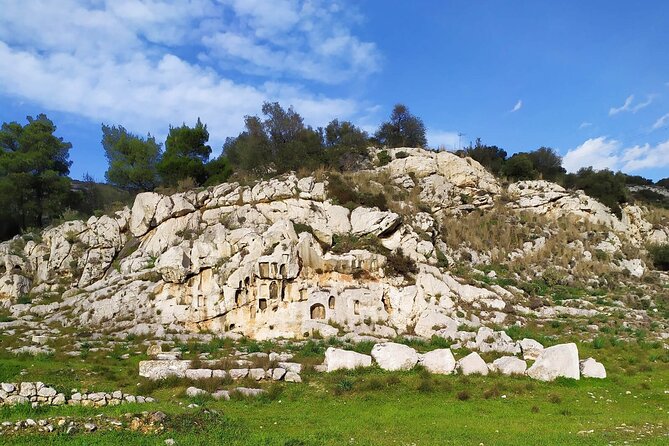
The Telesterion was the great hall where initiates took part in the central ceremonies. It is one of the most important points in the sanctuary, even though the surviving structure is made up of foundations and partial remains rather than a complete building.
The hall’s scale helps you picture the importance of the rites. This was not a small household cult. It was a major religious institution that drew pilgrims to Eleusis over many centuries.
You have about ten minutes specifically assigned to this area. The driver-guide can prepare you with the story before you arrive, which is useful because there is no licensed guide included inside the site. One especially helpful approach is to learn the route and basic mythology in the car, then use your time among the ruins to look closely instead of trying to read everything at once.
The Great Propylaea and the Entrance to the Sacred World
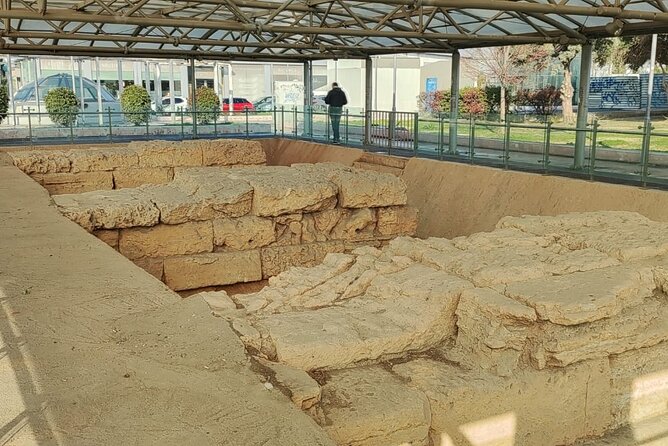
The Great Propylaea was the monumental gateway into the sanctuary. Built in the second century CE under Emperor Marcus Aurelius, it echoed the Propylaea of the Acropolis.
Its role was symbolic as well as practical. Passing through a grand entrance marked a shift from ordinary life into the sacred precinct. The massive stonework and Doric columns would have made the approach feel formal and controlled, fitting for a ceremony tied to death, rebirth, and the fate of the soul.
The stop lasts about ten minutes. Look for the scale and layout rather than expecting a complete gateway. The ruins give you enough to understand the dramatic entrance, especially if you have already heard how pilgrims approached Eleusis along the Sacred Way.
The Kallichoron Well and the Ploutonion
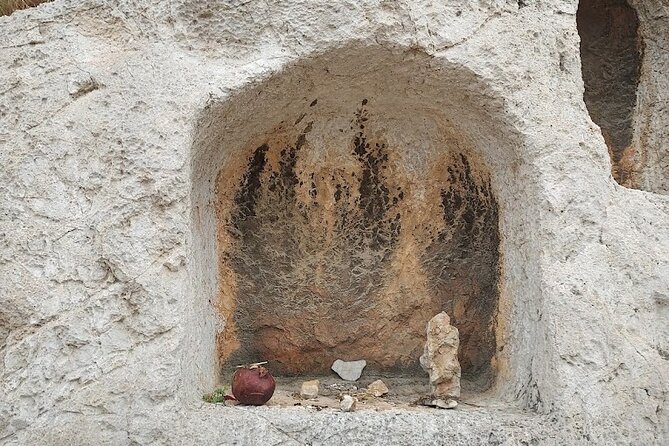
The Kallichoron Well is linked to the story of Demeter searching for Persephone. Its name means well of the beautiful dances, and tradition connects the spot with women who danced there to comfort the grieving goddess.
This is a small site, but mythology gives it unusual weight. The well connects the broad story of the Eleusinian Mysteries to a specific place where Demeter is said to have rested. You will have about ten minutes, enough to hear the story and see the remains.
The Ploutonion is associated with Hades, also called Plouton, and was believed to mark a mythical entrance to the Underworld. It represents the descent of Persephone, a central part of the Eleusinian story.
These two stops work well together. The well recalls grief and searching, while the Ploutonion points toward the Underworld and the return of life. Neither is a dramatic cave attraction in the modern sense, so approach them as symbolic archaeological points rather than theatrical sights.
The Museum of Eleusis
The Archaeological Museum of Eleusis is included in the site visit, with about 30 minutes set aside for it. It contains statues of Demeter and Persephone, votive offerings, and reliefs connected with the sanctuary.
The museum is important because the ruins alone cannot show you how the sanctuary looked when it was active. Objects and carved scenes add faces, gestures, and religious meaning to the stone foundations outside.
Again, half an hour gives you an introduction rather than a complete museum visit. Focus on the pieces tied directly to Demeter, Persephone, and the Eleusinian rites. Admission is not included in the tour price, and the stated archaeological admission fee is €10 per person.
Private Transport, Timing, and Group Size
Groups of one to four people ride in a luxury sedan. Groups of five to seven use a comfortable minivan. Both vehicle types are air-conditioned, and Wi-Fi is provided on board.
Pickup is available from designated hotels, apartments, and cruise ports. At a port, the driver meets you in the arrival area with a sign showing your name. Airport pickup can be arranged for an added cost. The tour returns you to the original meeting point.
The four to five hour duration includes travel between stops. That is important. The listed sightseeing times add up to several hours, but the road portions fill out the rest of the schedule. You are not spending the whole outing walking through ruins.
The private format is best for people who value flexible conversation and a direct ride over a formal group tour. It also suits families and small groups that want to keep everyone together. The tradeoff is that the driver is not a licensed archaeological guide accompanying you inside the sites. If detailed art and architecture commentary is your priority, budget for that extra service.
Who Should Book This Eleusis Tour?
I would choose this tour if you are fascinated by Greek mythology, ancient religion, or the way a historic route connects several sites. It is also a good fit if you have already seen Athens’ central monuments and want a quieter excursion with a strong theme.
The tour is especially useful for visitors who want the story explained while driving. Guides such as Pericles and Demetrios have been praised for kindness, clear historical explanation, and for not rushing the experience. That personal tone matters on a route where many remains are modest and need context.
I would hesitate if your main goal is a long, detailed visit to the Eleusis museum and sanctuary. The schedule gives you a solid overview, but the main site receives limited time. I would also think twice if you dislike short photo stops or ancient remains that require imagination.
Free cancellation is available up to 24 hours before the start time. Changes made within 24 hours are not accepted, and poor weather can lead to a new date or full refund. Check the forecast, especially since much of the visit takes place outdoors.
Should You Book It?
Book this private Eleusis tour if you want the ancient pilgrimage route, not just the final ruins. The Sacred Way, Daphni Monastery, Aphrodite’s sanctuary, Roman bridge, and Eleusis site form a coherent half-day story that is hard to assemble on your own.
The price makes the most sense for a small group sharing private transport. Add the entrance fee and any licensed guide cost when comparing options. If you want mythology brought to life by a friendly driver-guide and prefer a well-planned route with hotel or port pickup, this is a strong choice. If you want hours of slow museum study, arrange more time at Eleusis or choose a tour built around an on-site licensed guide.
FAQ
How long does the private Eleusis tour last?
The experience lasts approximately four to five hours, including the time spent driving between the stops.
What is included in the tour price?
The price includes private transportation, an air-conditioned vehicle, Wi-Fi, bottled water, an English-speaking driver with extensive historical knowledge, and hotel or cruise-port pickup and drop-off.
Are admission tickets included?
No. Entrance fees for the archaeological sites and museums are not included. The stated admission cost is €10 per person.
Is a licensed guide included inside the archaeological sites?
No. A licensed guide to accompany you inside the archaeological sites is not included and is available only as an additional arrangement.
What vehicle will a private group use?
Groups of one to four people use a luxury sedan. Groups of five to seven people use a comfortable minivan.
Can I cancel for a full refund?
Yes, if you cancel at least 24 hours before the experience start time. Cancellations made less than 24 hours in advance are not refunded, and poor weather may result in a different date or a full refund.
New VIP and luxury tours around Athens
- Visit Delphi & Meteora Monasteries Luxury Private Tour FromAthens★ 5.0 · 9 reviews
- VIP Day Cruise from Athens to Hydra, Poros and Aegina★ 4.5 · 58 reviews
- Discover Lefkes: Traditional Greek Village Paros VIP Experience★ 4.0 · 5 reviews
- VIP – Day Cruise From Athens to Hydra Poros Aegina★ 4.5 · 28 reviews
- Private Athens Transfer Airport/Port -Greek Tours-Hourly service★ 5.0 · 88 reviews
- Private Luxury Transfers in Athens, Piraeus Port & Athens Airport★ 4.5 · 24 reviews
- VIP Private Guided Tour of Athens Acropolis & Plaka in a Sidecar★ 5.0 · 108 reviews
- Private Luxury Transfer from Athens to Athens Airport★ 5.0 · 25 reviews
More of the best Athens Luxury Tours

Luxury Catamaran Cruise from Athens with Traditional Greek Meal and BBQ
Read our review →
Hydra, Poros and Egina Day Cruise from Athens with Optional VIP Upgrade
Read our review →
Athens Pub Crawl with 1hr Open Bar & VIP Nightclub Access
Read our review →
Half Day Best Of Athens Highlights Luxury Private Tour 4Hou
Read our review →
Private Luxury Biblical Tour: Apostle Paul in Athens & Corinth
Read our review →
From Athens: Saronic Islands Full-Day Cruise with VIP Seats
Read our review →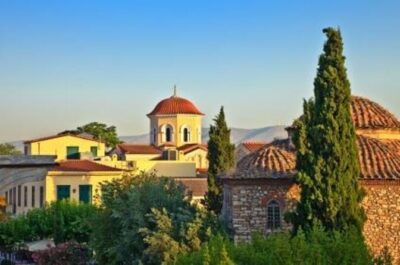
VIP Private Guided Tour of Athens Acropolis & Plaka in a Sidecar
Read our review →
The Original Athens Pub Crawl With VIP Club Entry
Read our review →Lists this tour is ranked in